How to Wash a Car Without Scratches: The Two-Bucket Method, Step by Step
Most swirl marks don't come from driving — they come from washing. This is the two-bucket method home detailers use to keep grit off the paint, explained without the fluff.
We choose products from research, not brand deals. If you buy through our links, we may earn a commission from Amazon at no extra cost to you. How we choose & earn
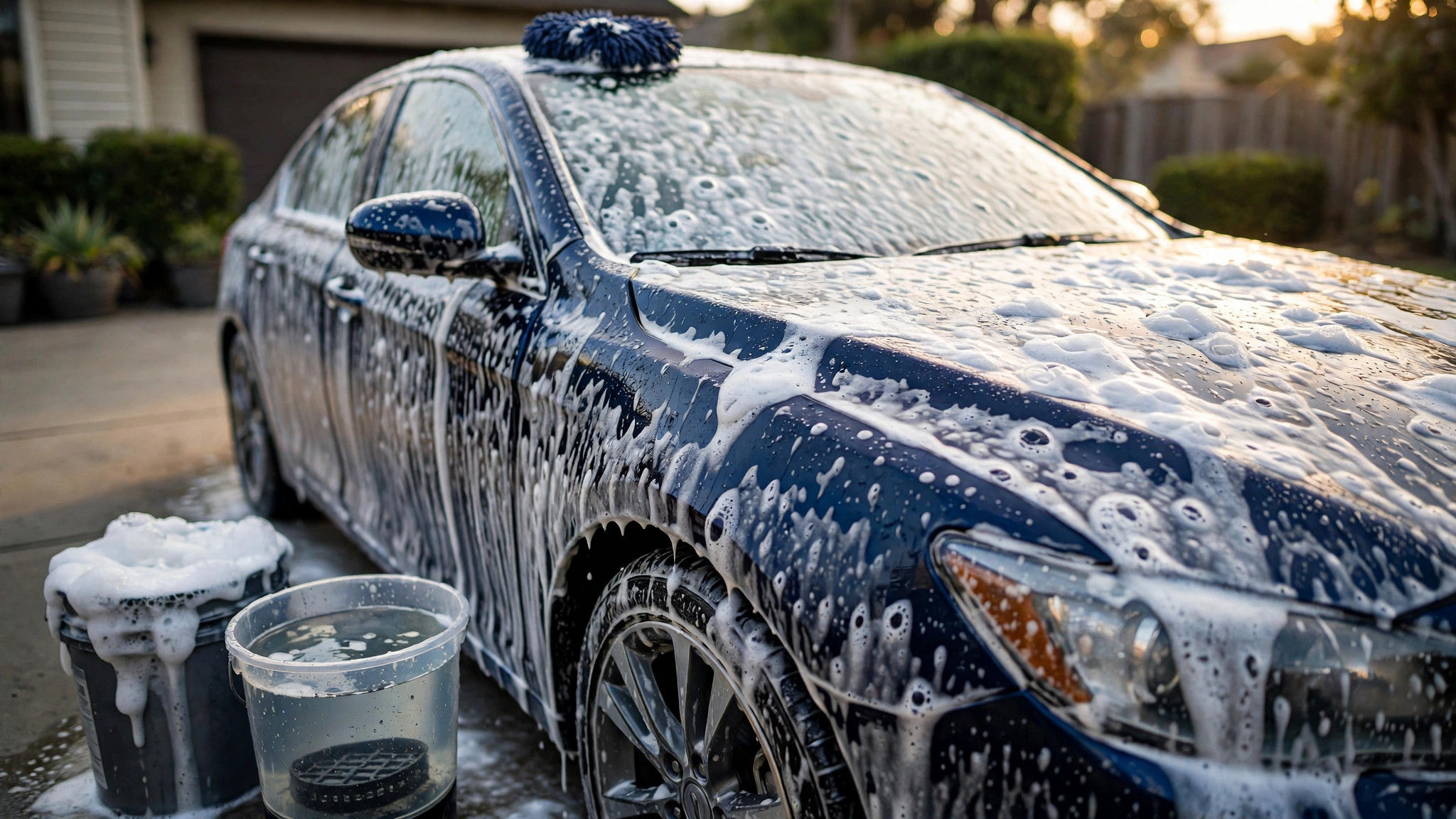
- Time:
- 45–60 minutes
- Difficulty:
- Beginner
- Steps:
- 6
What you'll need
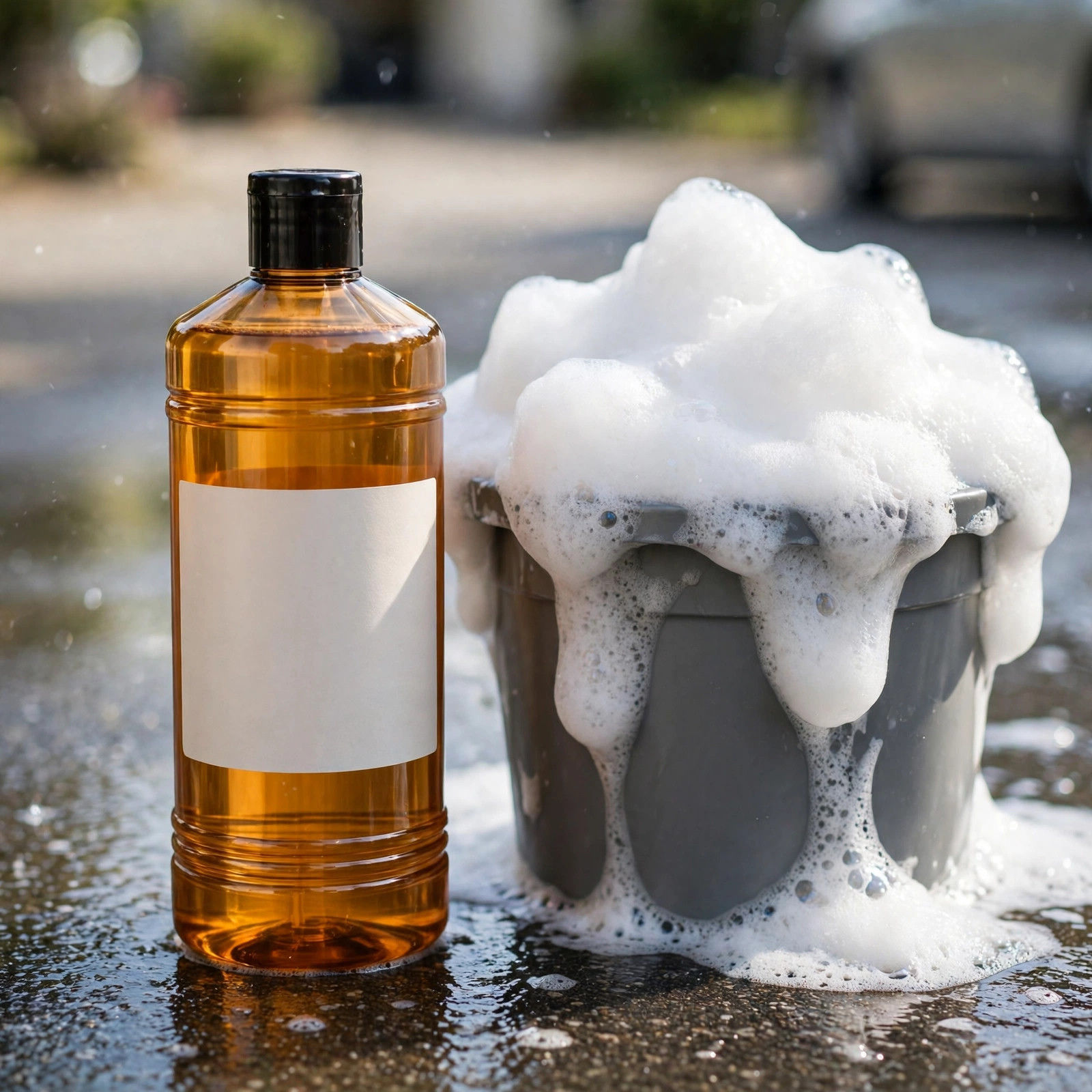 Meguiar's Gold Class Car Wash Shampoo & ConditionerRich-foaming shampoo that cleans and conditions paint in one step; pH balanced, safe on wax and sealant, works in a bucket or foam cannon.Check price on Amazon(opens Amazon, paid link)
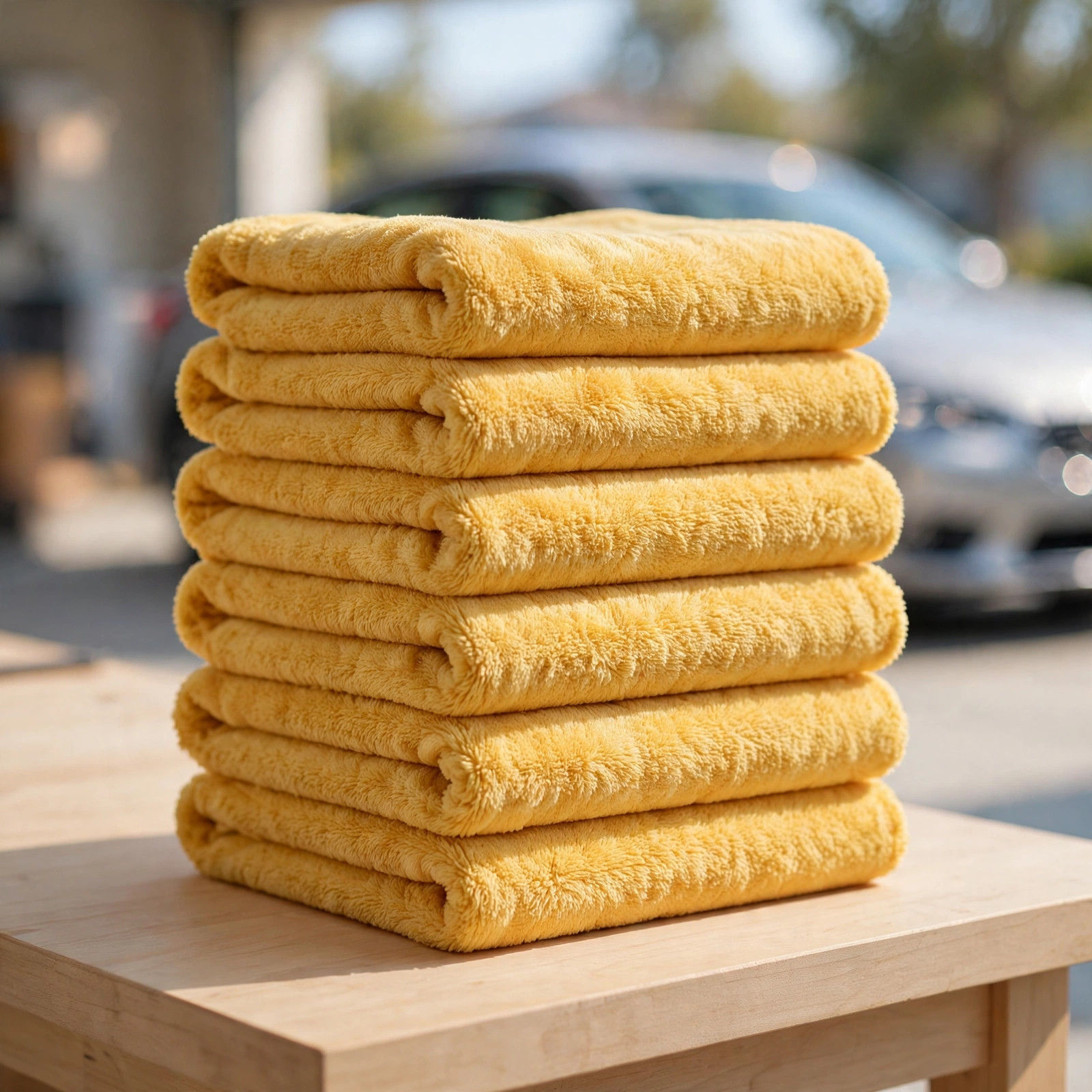 Chemical Guys Professional Grade Microfiber Towels, 12-Pack16 x 16 in plush microfiber towels for buffing, drying small panels and interior wipe-downs.Check price on Amazon(opens Amazon, paid link)
Scratches during a wash happen when grit picked up from a lower panel gets dragged across the next one. Everything in this method — two buckets, a grit guard, rinsing the mitt — exists to break that one chain. Work in shade, on a cool panel, and never let soap dry on the paint.
Step-by-step
Step 1: Rinse the whole car, top to bottom
Knock off loose dirt and grit before anything touches the paint. Spend extra time on the lower panels and behind the wheels, where grit concentrates.
Step 2: Wheels and tires first
They carry brake dust and road grit. Clean them before the paint buckets come out, with separate tools, so none of it ends up in your wash water.
Step 3: Fill two buckets
One with shampoo solution (Gold Class at the label dilution, about 1 oz per gallon), one with plain rinse water. A grit guard in the rinse bucket traps dirt at the bottom.
Step 4: Wash one panel at a time, top down
Roof, glass, hood, upper doors, then lower panels last. Straight, overlapping passes beat circular scrubbing.
Step 5: Rinse the mitt after every panel
Dunk and agitate the mitt in the rinse bucket before it goes back into the soap. This step is the whole point of the second bucket.
Step 6: Final rinse, then dry immediately
Rinse all soap off, then dry with a clean microfiber drying towel. Air-drying leaves mineral spots that are harder to remove than the dirt was. Use a proper drying towel — see the microfiber setup that won’t scratch paint.
Common mistakes: One bucket for everything (your wash water becomes liquid sandpaper by the third panel). Dish soap (it strips wax and dries out trim; a pH-balanced car shampoo exists precisely to avoid this). Washing in direct sun (soap and water spots dry onto hot paint). Dropping the mitt and reusing it without rinsing (pick it up, rinse it thoroughly, or swap it). Once the car is clean, the next step is clay bar decontaminate paint — washing alone doesn’t remove bonded grit.
FAQ
Do I really need two buckets for a small car?
Yes — the method matters more, not less, on a small car, because the same mitt covers every panel and picks up lower-panel grit faster.
Can I use a foam cannon instead of buckets?
A cannon is a pre-wash step, not a replacement. Foam loosens dirt, but the contact wash still needs clean soap and a rinse bucket.
How often should I wash my car?
Every one to two weeks for a daily driver. Bird droppings and bug splatter should come off within a day or two — both etch clear coat.